




Sample Cutting Die
Product Overview
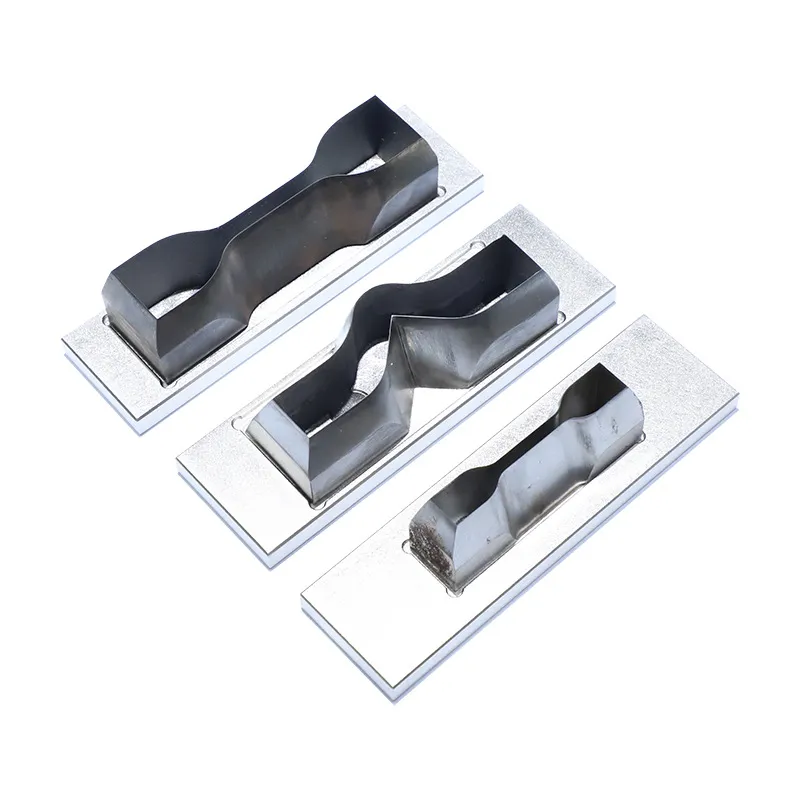
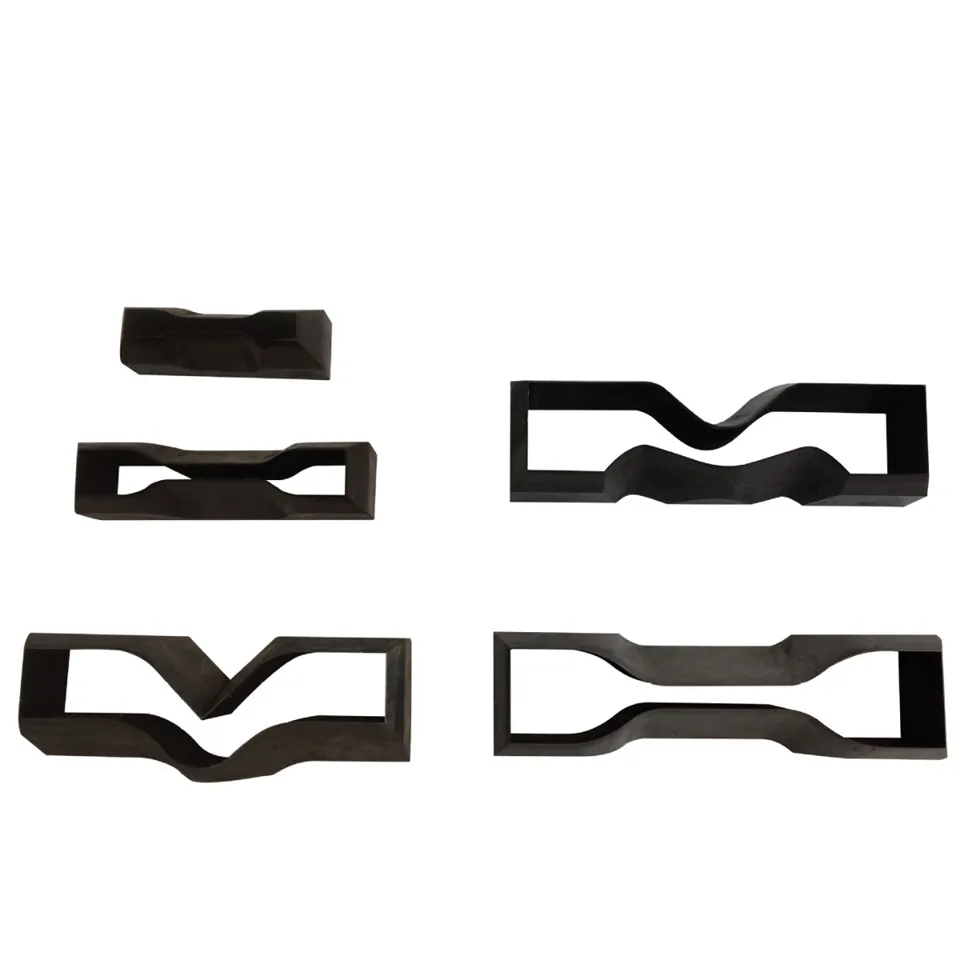
The sample cutting die is a shaped steel tool used with a manual, electric, or pneumatic cutting press to punch standardized specimens from rubber, plastic, cable sheath, film, or other flexible sheet material. The cutting edge defines the final tensile, tear, low-temperature, or special test-piece geometry.
It is used in material laboratories and production quality-control rooms that prepare repeated specimens from molded sheets or finished-product sections. Available formats include dumbbell dies, right-angle, trouser, crescent and Delft tear dies, low-temperature brittleness dies, and cable-sheath tear dies.
Core Advantages
Dumbbell sizes for different material availability. Six standard formats range from 10 x 150 mm down to 2 x 35 mm. Thick or abundant sheet can use a larger gauge section, while thin material or limited sample area can be prepared with a smaller die without changing the cutting press.
Dedicated tear-test geometries. Right-angle, trouser, crescent, Delft, low-temperature, and cable tear dies reproduce the specific crack path required by each method. In tear testing, the correct contour prevents the failure from being redirected by an improvised notch or uneven side edge.
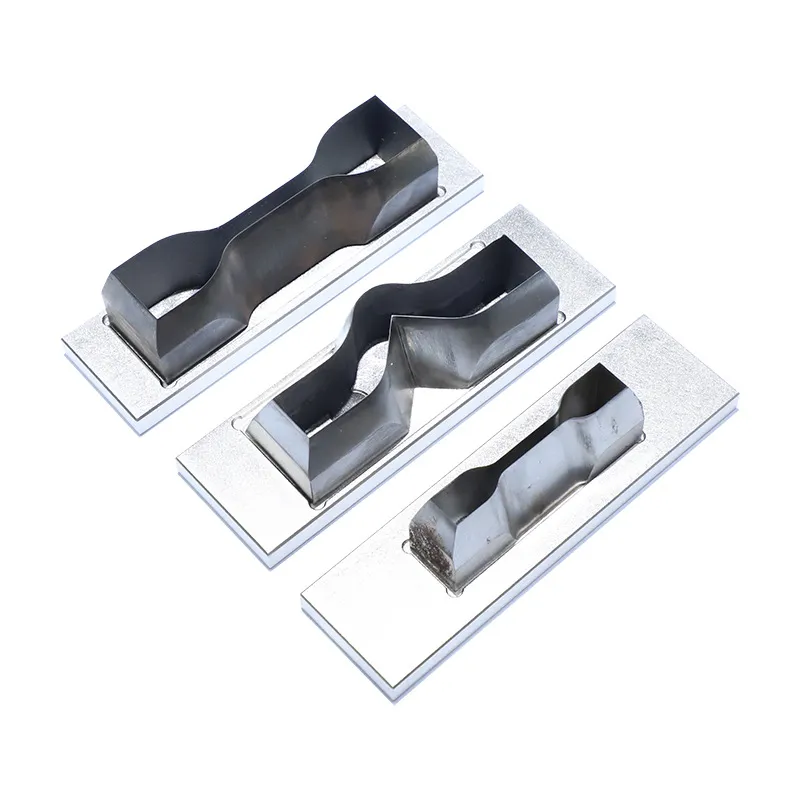
Heat-treated cutting edge. The die body is made from steel and heat treated, with the cutting profile ground to the approved geometry. When the die passes through a rubber or plastic sheet, a continuous sharp edge reduces nicks and smeared sections that can become premature failure points during testing.
Customization Capability
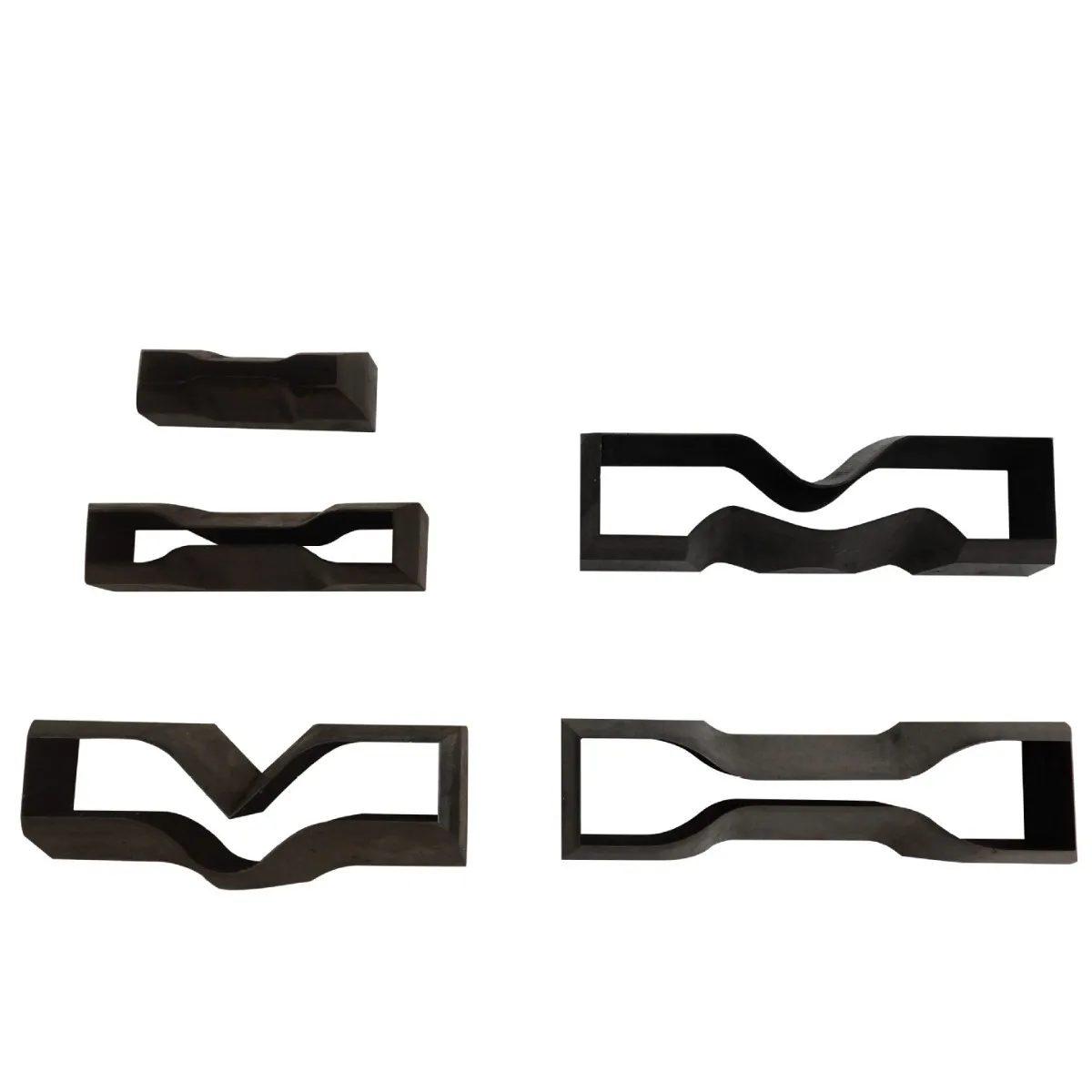
Standard or drawing-based geometry. Dies can be produced to GB, ISO, ASTM, DIN, JIS, or customer dimensions, including gauge width, radii, notches, tabs, and overall length.
Press and material matching. Die height, mounting stud, backing structure, blade thickness, and clearance can be matched to the cutting press and the material thickness or hardness.
Ejection and multi-cavity layout. Automatic-ejection rubber, handle arrangement, and single, double, or multi-cavity layouts can be specified when several specimens must be cut in one press cycle.
Quality Control
Profile measurement. The complete cutting contour is inspected against the approved drawing, including narrow gauge sections, shoulder radii, notch position, and overall symmetry.
Edge and material check. The cutting edge is examined for burrs, chips, decarburization, and local deformation. Heat-treatment or hardness requirements are verified when they are defined in the order.
Trial cutting. The die is tested on representative sheet material. The specimen must release without tearing, show a complete perimeter, and retain the specified dimensions before the die is packed.
Parameter Table
|
Die Name |
Spec / Type |
Main Use |
|
10×150 dumbbell die |
Dumbbell, width 10mm, length 150mm |
Tensile test, thicker samples |
|
6×115 dumbbell die |
Dumbbell, width 6mm, length 115mm |
Tensile test, medium samples |
|
5×100 dumbbell die |
Dumbbell, width 5mm, length 100mm |
Tensile test, standard samples |
|
4×75 dumbbell die |
Dumbbell, width 4mm, length 75mm |
Tensile test, thin samples |
|
4×50 dumbbell die |
Dumbbell, width 4mm, length 50mm |
Tensile test, small samples |
|
2×35 dumbbell die |
Dumbbell, width 2mm, length 35mm |
Tensile test, micro samples |
|
Right angle tear die |
Right angle shape |
Right angle tear strength test |
|
Trouser tear die |
Trouser shape |
Trouser tear test |
|
Crescent tear die |
Crescent shape |
Crescent tear test |
|
Delft tear die |
Delft standard |
Delft tear test |
|
Low temperature brittle test die |
Standard size |
Cut samples for low temp brittleness test |
|
Wire and cable tear die |
Special type |
Tear test for cable sheaths |
FAQ
Q: What is the minimum order quantity?
A: The minimum order quantity is 1 die or 1 set.
Q: What is the lead time for a standard die?
A: A standard die is normally completed in 7-10 days.
Q: How do I select the correct die?
A: Provide the test standard, specimen type, and material thickness. The die geometry and press match will be confirmed before production.
Q: Can a worn die be resharpened?
A: Yes, if sufficient cutting-edge material remains. The profile should be dimensionally rechecked after sharpening.
Hot Tags: sample cutting die, China sample cutting die manufacturers, suppliers, factory, Constant Temperature Bath For Laboratory Use, Cross Linked Cable Slicing Machine, Lab Two Roll Mill, Plate Vulcanizing Press, Sample Mold, specimen preparation
Previous
Sample MoldNext
Sample FixtureYou Might Also Like
Send Inquiry