




Lab Two Roll Mill
Product Overview
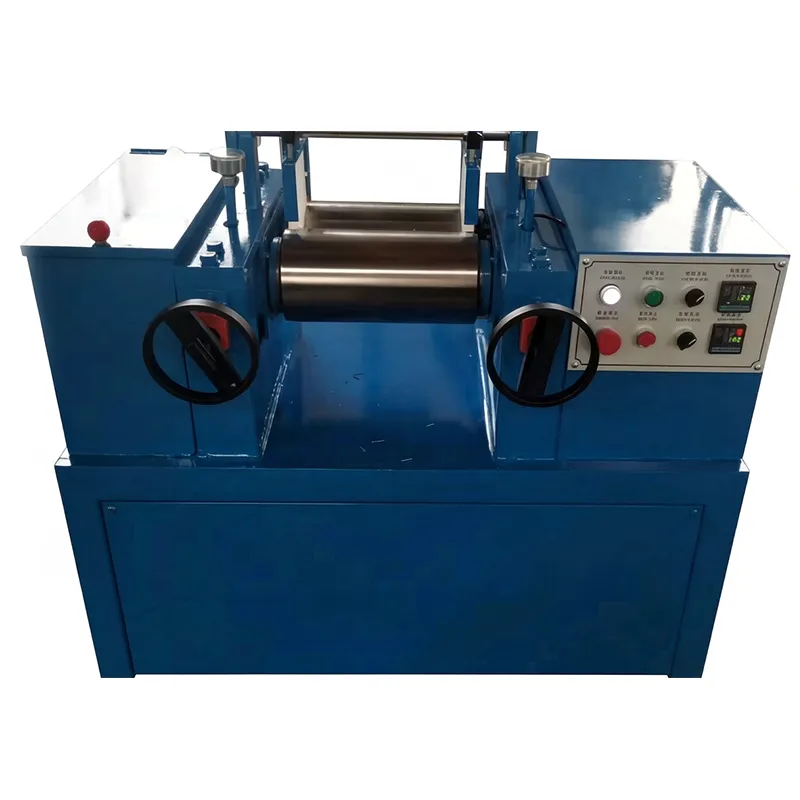
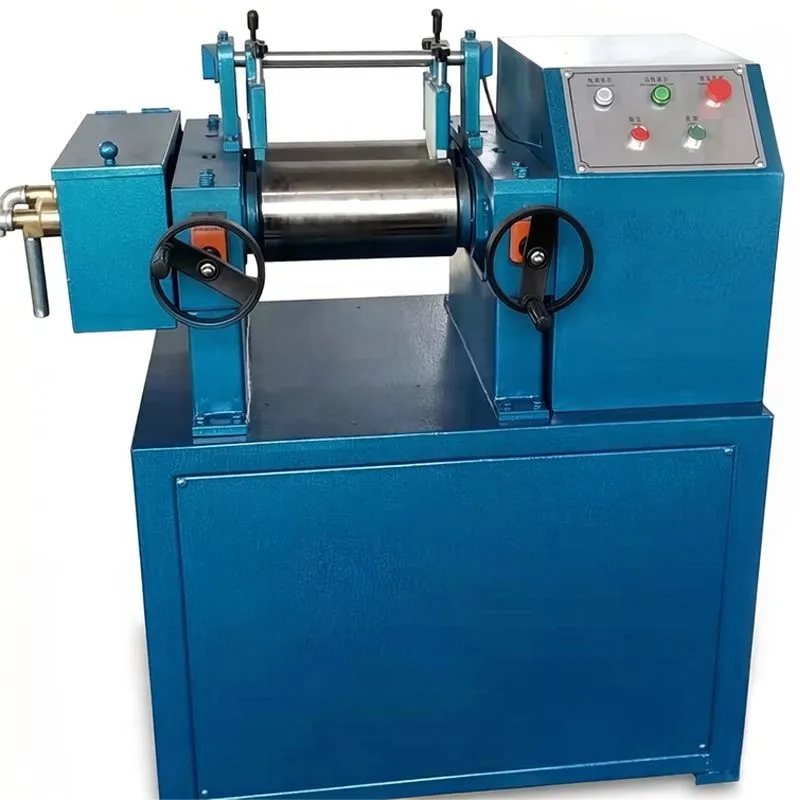
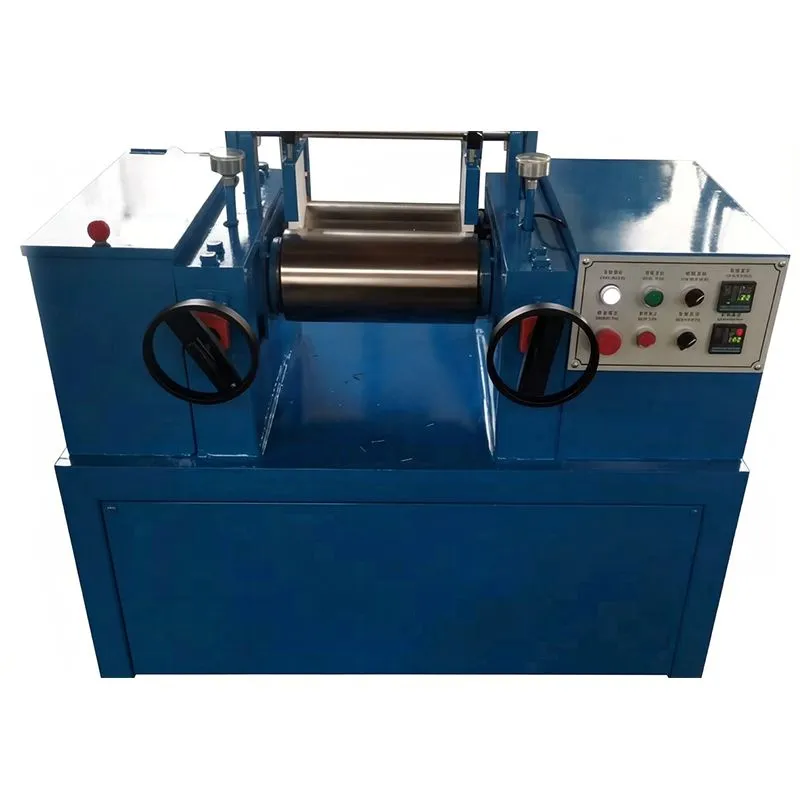
The lab two roll mill is a 6-inch open mixing mill for plasticating, blending, warming, and sheeting rubber or thermoplastic compounds. Material is repeatedly passed through the adjustable gap between two counter-rotating rolls to develop the compound and distribute fillers, pigments, curing agents, or other additives.
It is used in rubber and polymer research, incoming-material evaluation, formulation development, color matching, process trials, and preparation of laboratory sheets for subsequent molding or physical testing. The water-cooled and electrically heated versions serve different compound temperature requirements.
Core Advantages
linear speeds of 9.04 and 12 m/min. During filler or additive dispersion, the differential roll speed creates repeatable shear instead of merely flattening the compound.
Small-batch control. The adjustable roll gap is 0-5 mm and the recommended batch size is 1-2 kg. Formulation teams can evaluate a compound with limited raw material, then progressively reduce the gap to obtain the required band and sheet thickness.
Heating or cooling selection. The XK-160 removes process heat through water cooling, while the SK-160 provides electric heating from room temperature to 250°C. Heat-sensitive rubber mixing and thermoplastic warming can therefore be handled with the thermal system suited to the material rather than with one fixed roll condition.
Customization Capability
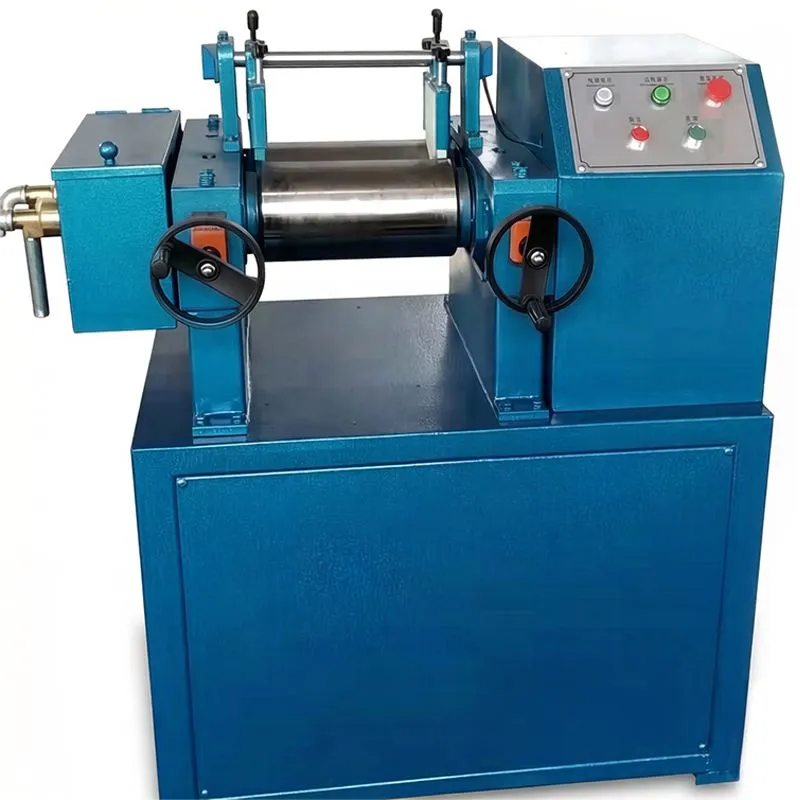
Thermal configuration. Water-channel arrangement, electric-heating control, target operating temperature, and connection layout can be selected for the compound and laboratory utility system.
Roll and gap details. Roll surface finish, material specification, working-face width, gap-adjustment components, and material stops can be produced to an approved processing requirement.
Safety and electrical details. Emergency-brake layout, protective devices, voltage, frequency, operator labels, and nameplate language can be matched to the installation standard.
Quality Control
Roll geometry and surface. Roll hardness, surface finish, radial runout, parallelism, and gap consistency are inspected across the working width. The adjustment mechanism is checked from open position to minimum operating gap without metal-to-metal contact.
Drive-system verification. Front and rear roll speeds, speed ratio, bearing movement, gearbox noise, chain or sprocket engagement, and emergency braking are checked during no-load and compound-mixing runs.
Thermal-system test. The SK-160 is checked for heat-up response and temperature distribution, while the XK-160 is pressure-tested for water leakage and flow. Each mill receives a full operating inspection before packing.
Parameter Table
|
Model |
Roll Dia |
Roll Width |
Ratio |
Front Speed |
Back Speed |
Gap |
Feed |
Motor Power |
Heating Power |
Heating Type |
Cooling |
Max Temp |
Dimensions (L×W×H) |
Weight |
|
XK-160 (water cooling) |
160mm |
320mm |
1:1.35 |
9.04m/min |
12m/min |
0-5mm |
1-2kg |
5.5KW |
--- |
--- |
Water |
--- |
1300×900×1300mm |
~800kg |
|
SK-160 (electric heating) |
160mm |
320mm |
1:1.35 |
9.04m/min |
12m/min |
0-5mm |
1-2kg |
4KW |
3.6KW |
Electric |
--- |
Room~250℃ |
1300×900×1300mm |
~700kg |
FAQ
Q: What is the standard payment term?
A: Full payment is required before shipment.
Q: How is the mill packed for export?
A: It is packed in a fumigation-free plywood case.
Q: Does every model need cooling water?
A: No. The XK-160 needs cooling water; the SK-160 uses electric heating.
Q: How should the roll gap be adjusted at startup?
A: Begin with a wider gap, establish a stable material band, and then reduce the gap in controlled steps. Do not allow the rolls to contact each other.
Hot Tags: lab two roll mill, China lab two roll mill manufacturers, suppliers, factory, Constant Temperature Bath For Laboratory Use, Dumbbell Sample Making Machine, Rubber Slicing Machine, Sample Cutting Die, Sample Fixture, Sample Mold
Previous
Plate Vulcanizing PressYou Might Also Like
Send Inquiry