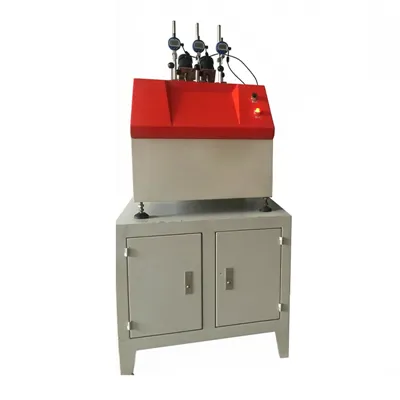
The drop hammer impact tester is a crucial piece of equipment in the field of material testing, used to evaluate the impact resistance of materials under dynamic loading. Among its various components, the anvil plays a vital role. As a leading supplier of drop hammer impact testers, I'd like to delve into the functions of the anvil in this testing apparatus.
1. Support and Positioning
The primary function of the anvil in a drop hammer impact tester is to provide a stable support for the test specimen. When the hammer is dropped from a certain height, it strikes the specimen placed on the anvil. The anvil needs to be firmly fixed to the base of the tester to ensure that it can withstand the high - energy impact without significant displacement.
The anvil is designed to hold the specimen in a precise position. This is crucial because any misalignment of the specimen can lead to inaccurate test results. For example, if the specimen is not centered on the anvil, the impact force may not be evenly distributed across the specimen, resulting in a distorted measurement of its impact resistance. The anvil's shape and dimensions are carefully engineered to match the size and shape of the test specimens commonly used in the testing process.
2. Energy Transfer and Absorption
During the impact test, the anvil acts as a medium for energy transfer. When the hammer strikes the specimen, the energy from the falling hammer is transferred through the specimen to the anvil. The anvil is made of a material with high strength and hardness, such as high - grade steel. This allows it to absorb a significant portion of the impact energy without deforming or breaking.
The anvil's ability to absorb energy helps to protect the base of the drop hammer impact tester. If the anvil were not present, the full force of the impact would be directly transferred to the base, which could cause damage to the tester's structure over time. Additionally, the anvil's energy - absorbing properties contribute to the repeatability of the test results. By absorbing a consistent amount of energy in each test, the anvil ensures that the impact conditions are as similar as possible for different specimens.
3. Force Distribution
The anvil also plays a role in distributing the impact force evenly across the specimen. When the hammer strikes the specimen, the anvil helps to spread the force over a larger area of the specimen's surface. This is important because it mimics real - world conditions where materials are often subjected to distributed loads.
For example, in automotive applications, a component may be hit by a foreign object, and the impact force is distributed over a certain area. By using an anvil that distributes the force evenly, the drop hammer impact test can more accurately simulate these real - world scenarios. This allows engineers to better understand how materials will perform under actual impact conditions.
4. Influence on Test Results
The design and properties of the anvil can have a significant impact on the test results. The hardness and surface finish of the anvil can affect the way the specimen deforms during the impact. A harder anvil may cause the specimen to deform more abruptly, while a softer anvil may allow for more gradual deformation.
The shape of the anvil also matters. Different anvil shapes can be used to simulate different types of impacts. For example, a flat anvil is suitable for testing specimens that are expected to experience a planar impact, while a V - shaped anvil can be used to test specimens that may be subjected to a more concentrated impact.
5. Compatibility with Different Specimens
As a drop hammer impact tester supplier, we understand the importance of anvil compatibility with different types of specimens. We offer a range of anvils with different sizes, shapes, and materials to meet the diverse needs of our customers.
For example, for testing small and delicate specimens, we provide anvils with a smaller surface area and a more precise fit. On the other hand, for large - scale industrial specimens, we offer robust anvils that can handle high - energy impacts. This flexibility allows our customers to conduct a wide variety of impact tests on different materials, including metals, plastics, composites, and ceramics.

Related Testing Equipment
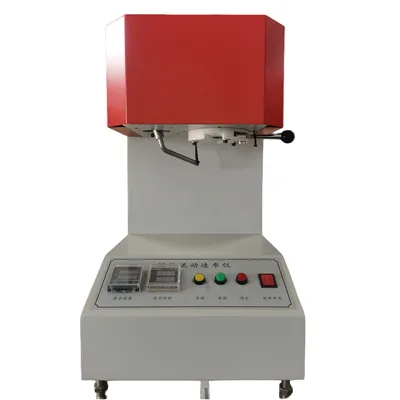
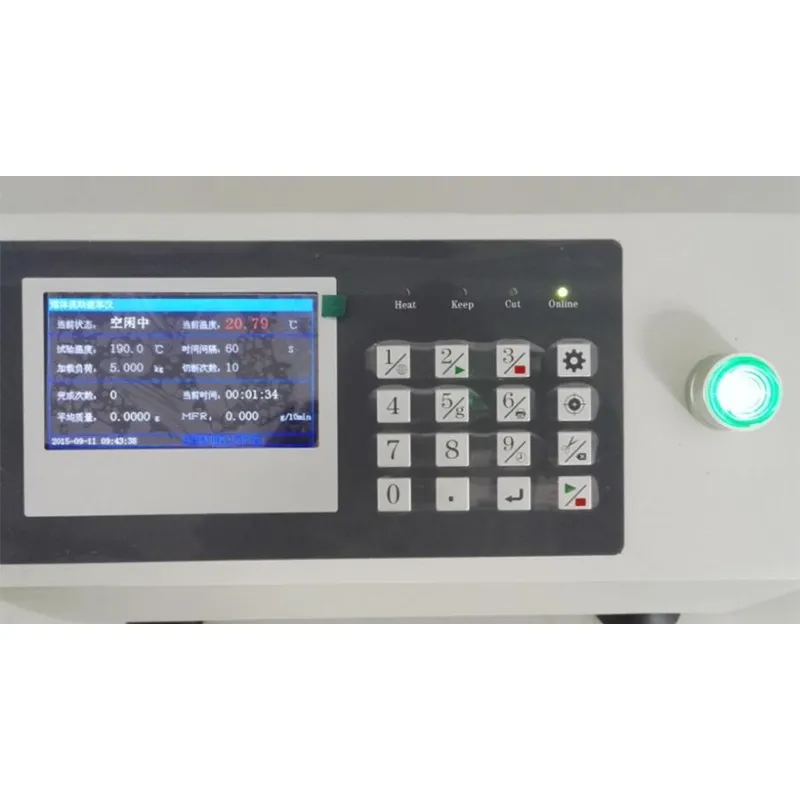
In addition to drop hammer impact testers, we also supply other important testing equipment. If you are interested in testing the melt flow properties of polymers, our Melt Flow Index Instrument is an excellent choice. It can accurately measure the melt flow rate of polymers, which is crucial for quality control in the plastic industry.
For testing the performance of materials under low - temperature conditions, our Low Temperature Test Chamber provides a controlled environment to simulate extreme cold conditions. This is essential for industries such as aerospace and automotive, where materials need to perform reliably in cold environments.
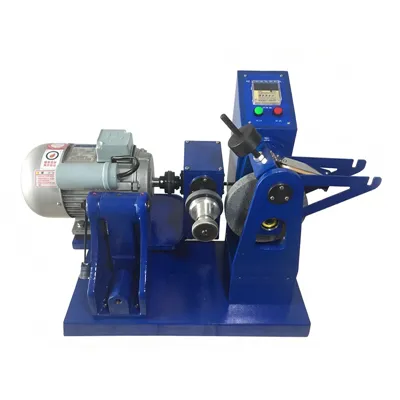
If you need to test the abrasion resistance of materials, our Rotary Drum Abrasion Tester can help. It uses a rotating drum to simulate the wear and tear that materials may experience in real - world applications.
Conclusion
In conclusion, the anvil in a drop hammer impact tester is a critical component that performs multiple functions. It provides support and positioning for the test specimen, transfers and absorbs energy, distributes the impact force evenly, and influences the test results. As a supplier of drop hammer impact testers, we are committed to providing high - quality anvils and other testing equipment to meet the needs of our customers.
If you are interested in purchasing a drop hammer impact tester or any of our other testing equipment, please feel free to contact us for further details and to discuss your specific requirements. We look forward to working with you to ensure accurate and reliable material testing.
References
- ASTM International. (20XX). Standard Test Methods for Impact Testing of Metallic Materials. ASTM E23 - XX.
- ISO. (20XX). ISO 148 - 1: Metallic materials - Charpy pendulum impact test - Part 1: Test method.