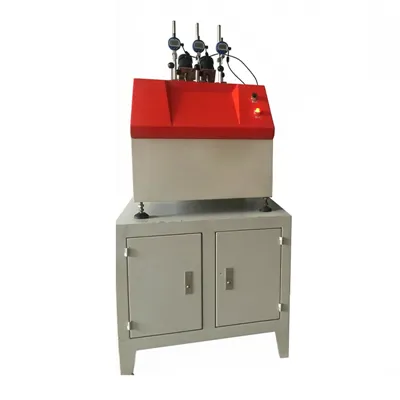
As a provider of high - quality sample molds, I understand the crucial role that mold strength plays in the manufacturing process. A strong sample mold not only ensures the accuracy and durability of the samples but also contributes to the overall efficiency and cost - effectiveness of production. In this blog, I will share some effective strategies on how to increase the strength of a sample mold.
Material Selection
The first step in enhancing the strength of a sample mold is to choose the right materials. Different materials have varying properties, and selecting the appropriate one can significantly impact the mold's strength.
Steel Alloys
Steel alloys are a popular choice for sample molds due to their high strength, hardness, and wear resistance. For example, tool steels such as D2 and H13 are commonly used. D2 steel is known for its excellent wear resistance, making it suitable for molds that will be used for high - volume production. H13 steel, on the other hand, has good toughness and heat resistance, which is beneficial for molds used in processes involving high temperatures, like injection molding.
Aluminum Alloys
Aluminum alloys are also used in sample mold production. They are lightweight, which can reduce the overall weight of the mold and make it easier to handle. Some high - strength aluminum alloys, like 7075, offer good strength - to - weight ratios. However, they may not be as wear - resistant as steel alloys, so they are often used for low - volume production or prototypes.
Heat Treatment
Heat treatment is a critical process that can significantly improve the strength of a sample mold.
Quenching and Tempering
Quenching involves rapidly cooling the mold after heating it to a specific temperature. This process creates a hard and brittle structure. Subsequently, tempering is carried out to relieve the internal stresses created during quenching and improve the mold's toughness. By carefully controlling the quenching and tempering parameters, such as the heating temperature, cooling rate, and tempering time, we can achieve the desired balance between hardness and toughness.
Case Hardening
Case hardening is another heat - treatment technique that can enhance the surface hardness of the mold while maintaining a tough core. Processes like carburizing, nitriding, and carbonitriding introduce carbon or nitrogen into the surface layer of the mold, creating a hard outer layer. This can improve the mold's wear resistance and resistance to deformation.
Design Optimization
A well - designed mold can also contribute to its strength.
Wall Thickness
Proper wall thickness is essential for mold strength. If the walls are too thin, the mold may be prone to cracking or deformation under pressure. On the other hand, overly thick walls can increase the weight of the mold and may also lead to longer cooling times. By analyzing the stress distribution in the mold during the manufacturing process, we can determine the optimal wall thickness for different parts of the mold.
Ribs and Gussets
Adding ribs and gussets to the mold design can increase its stiffness and strength. Ribs are thin, vertical structures that can be placed on the sides of the mold, while gussets are triangular structures that provide additional support at corners. These features help to distribute the stress evenly across the mold, reducing the risk of failure.
Fillets and Radii
Using fillets and radii at sharp corners in the mold design can prevent stress concentration. Sharp corners can act as stress raisers, increasing the likelihood of cracking. By rounding these corners, we can reduce the stress concentration and improve the overall strength of the mold.
Manufacturing Processes
The manufacturing processes used to produce the sample mold can also affect its strength.
Machining
Precision machining is crucial for ensuring the dimensional accuracy and surface finish of the mold. High - quality machining can reduce the presence of surface defects, such as scratches and burrs, which can act as stress concentrators. Additionally, using advanced machining techniques, like high - speed machining, can improve the surface integrity of the mold and enhance its strength.
Welding
If welding is required during the mold manufacturing process, proper welding techniques must be employed. Welding can introduce residual stresses into the mold, which can weaken its structure. By using appropriate welding parameters, such as the welding current, voltage, and speed, and by performing post - weld heat treatment, we can minimize the negative effects of welding on the mold's strength.
Surface Treatment
Surface treatment can further enhance the strength and performance of a sample mold.
Coating
Applying a coating to the mold surface can improve its wear resistance, corrosion resistance, and release properties. For example, titanium nitride (TiN) coatings are commonly used in mold applications. TiN coatings have high hardness and low friction coefficients, which can reduce the wear on the mold surface and improve the quality of the samples.
Polishing
Polishing the mold surface can reduce surface roughness and improve the mold's release properties. A smooth surface can also reduce the adhesion between the mold and the sample material, making it easier to remove the samples from the mold. Additionally, a polished surface can reduce the risk of surface defects on the samples.
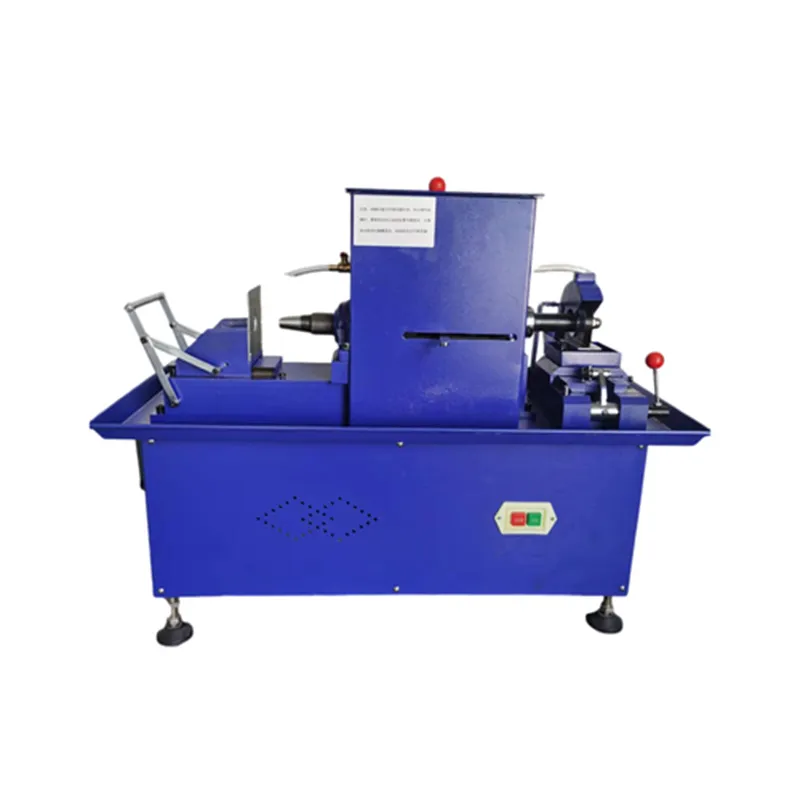

Equipment for Sample Mold Preparation
In the process of sample mold production, some equipment can help us ensure the quality and strength of the mold. For example, the Rubber Slicing Machine can accurately slice rubber materials, which is very important for the production of rubber - related sample molds. The Plate Vulcanizing Press is used for vulcanizing rubber molds, which can improve the physical properties of the rubber and enhance the strength of the mold. And the Double - head Slicer can provide more efficient and precise slicing operations, which is beneficial for the production of high - quality sample molds.
Conclusion
Increasing the strength of a sample mold is a multi - faceted process that involves material selection, heat treatment, design optimization, manufacturing processes, and surface treatment. By carefully considering each of these aspects, we can produce sample molds with high strength, durability, and performance.
If you are interested in our sample molds or have any questions about mold strength improvement, please feel free to contact us for further discussion and procurement negotiation. We are committed to providing you with the best - quality sample molds and professional technical support.
References
- Campbell, J. D. (2012). Manufacturing Engineering & Technology. Pearson.
- Kalpakjian, S., & Schmid, S. R. (2014). Manufacturing Processes for Engineering Materials. Wiley.
- Dieter, G. E. (2000). Mechanical Metallurgy. McGraw - Hill.