Can a Sonic Tester Thickness measure the thickness of rubber materials?
As a supplier of Sonic Tester Thickness, I often encounter inquiries from customers about the applicability of our product in measuring the thickness of rubber materials. In this blog, I will delve into the technical aspects and practical considerations to answer this question comprehensively.
The Principle of Sonic Tester Thickness
Sonic Tester Thickness operates on the principle of ultrasonic waves. When an ultrasonic pulse is sent into a material, it travels through the material until it reaches the opposite surface. At this point, a portion of the ultrasonic wave is reflected back to the transducer. By measuring the time it takes for the ultrasonic wave to travel to the opposite surface and back, and knowing the speed of sound in the material, the thickness of the material can be calculated using the formula:
[d=\frac{v\times t}{2}]
where (d) is the thickness of the material, (v) is the speed of sound in the material, and (t) is the time of flight of the ultrasonic wave.
Suitability for Rubber Materials
Rubber is a viscoelastic material, which means it has both viscous and elastic properties. These properties can have a significant impact on the performance of a Sonic Tester Thickness.
Advantages of Using Sonic Tester Thickness for Rubber
- Non - destructive testing: One of the most significant advantages of using a Sonic Tester Thickness for rubber materials is that it is a non - destructive testing method. This means that the rubber sample can be tested without causing any damage to it, allowing for repeated measurements and the preservation of the sample for further use.
- High precision: Modern Sonic Tester Thickness devices are capable of providing high - precision measurements. For rubber materials, where thickness uniformity is crucial in many applications, this precision can be invaluable. For example, in the manufacturing of rubber seals, accurate thickness measurement ensures a proper fit and reliable performance.
Challenges of Using Sonic Tester Thickness for Rubber
- Variable speed of sound: The speed of sound in rubber can vary depending on factors such as the type of rubber (e.g., natural rubber, synthetic rubber), its hardness, and temperature. This variability can make it challenging to obtain accurate thickness measurements. To address this issue, it is often necessary to calibrate the Sonic Tester Thickness using a rubber sample of known thickness.
- Attenuation of ultrasonic waves: Rubber has a relatively high attenuation rate for ultrasonic waves. This means that the ultrasonic signal can weaken significantly as it travels through the rubber, making it more difficult to detect the reflected signal accurately. In some cases, especially for thick rubber samples, the attenuation may be so severe that the reflected signal is too weak to be measured.
Factors Affecting Measurement Accuracy
- Surface condition: The surface condition of the rubber sample can have a significant impact on the accuracy of the measurement. Rough or uneven surfaces can cause the ultrasonic wave to scatter, leading to inaccurate time - of - flight measurements. Therefore, it is important to ensure that the surface of the rubber sample is smooth and clean before taking measurements.
- Temperature: As mentioned earlier, temperature can affect the speed of sound in rubber. For accurate measurements, it is necessary to control the temperature of the rubber sample or to use a Sonic Tester Thickness that can compensate for temperature variations.
Complementary Testing Equipment
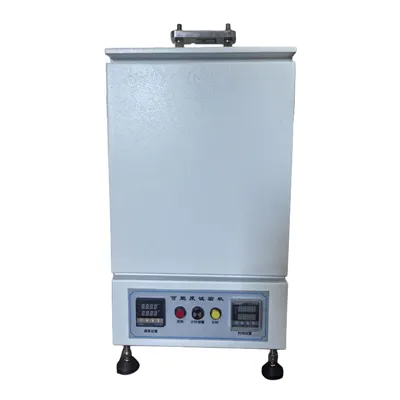
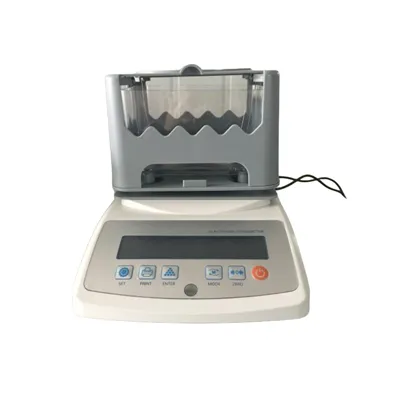
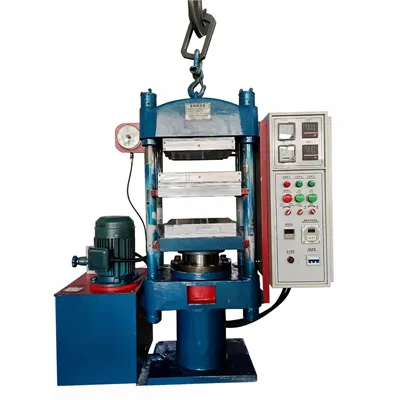
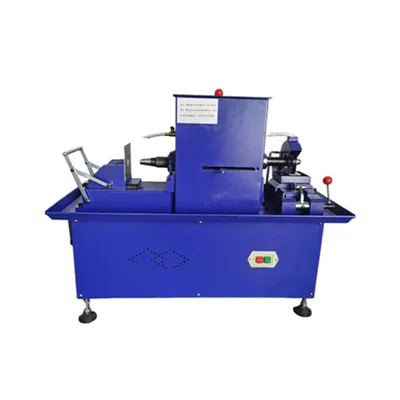
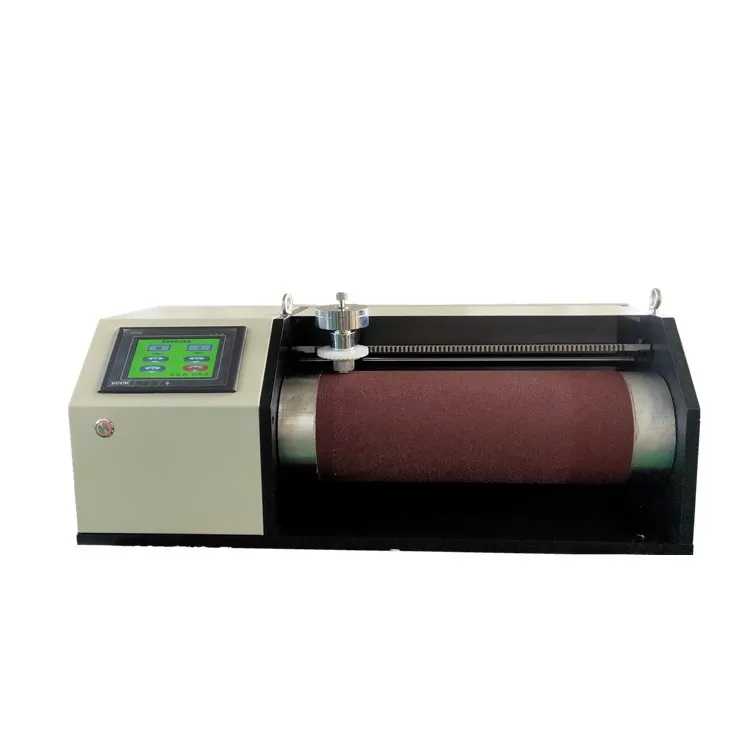
In addition to Sonic Tester Thickness, there are other testing equipment that can be used in conjunction with it to ensure the quality and properties of rubber materials. For example, a Plasticity Tester can be used to measure the plasticity of rubber, which is an important property related to its processing and performance. A Akron Abrasion Tester can be used to evaluate the abrasion resistance of rubber, which is crucial in applications where the rubber is subject to wear. A Ring Stiffness Tester can be used to measure the stiffness of rubber rings, which is important in applications such as pipe seals. A Rotary Drum Abrasion Tester can be used to simulate the abrasion of rubber under rotating conditions. And an Electronic Hardness Tester can be used to measure the hardness of rubber, which is related to its mechanical properties.

Conclusion
In conclusion, a Sonic Tester Thickness can be used to measure the thickness of rubber materials, but there are certain challenges that need to be addressed. By understanding the principles of ultrasonic measurement, the properties of rubber, and the factors that affect measurement accuracy, it is possible to obtain reliable thickness measurements. In addition, using complementary testing equipment can provide a more comprehensive understanding of the properties of rubber materials.
If you are interested in our Sonic Tester Thickness or have any questions about measuring the thickness of rubber materials, please feel free to contact us for further discussion and potential procurement. We are committed to providing high - quality products and professional technical support to meet your testing needs.
References
- Smith, J. (2018). Ultrasonic Testing of Materials. New York: Elsevier.
- Brown, A. (2019). Rubber Materials: Properties and Applications. London: Wiley.
- Jones, R. (2020). Non - Destructive Testing Techniques for Polymers. Cambridge: Cambridge University Press.