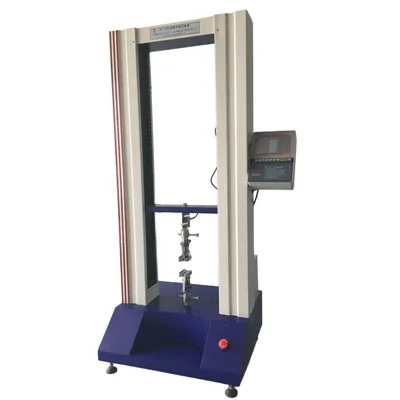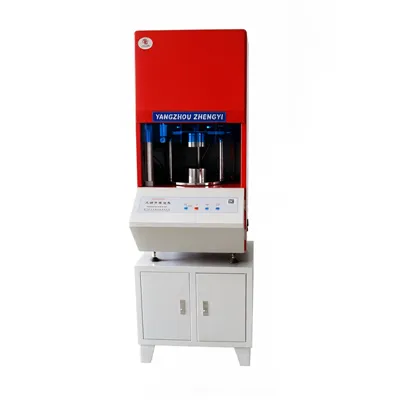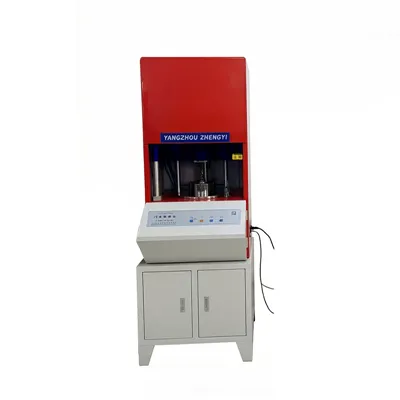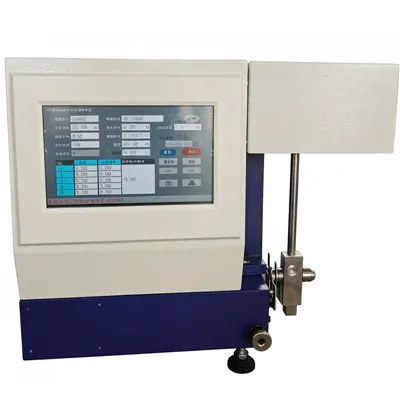
Rubber and plastic testing machines serve as essential instruments in the field of polymer material evaluation. Their primary function is to simulate real-world mechanical conditions and systematically assess the overall performance of rubber and plastic materials, providing reliable data for research, production control, and quality assurance.
One of the fundamental functions is mechanical property testing. By applying tensile, compression, bending, or shear forces, the system measures key parameters such as tensile strength, elongation at break, elastic modulus, and yield behavior. These results directly reflect how a material responds under stress and are crucial for material selection and structural design.
Another important capability is destructive and non-destructive analysis. In destructive testing, the machine applies increasing loads until the material fails, allowing researchers to determine ultimate strength and failure characteristics. In non-destructive or cyclic loading tests, it evaluates fatigue resistance and long-term durability, providing insight into service life under repeated stress conditions.
The equipment also supports processing performance evaluation. For plastic materials, melt flow behavior can be assessed to determine processing suitability, while in rubber testing, vulcanization characteristics and viscoelastic behavior are analyzed to optimize manufacturing processes.
In addition, modern systems feature advanced data acquisition and intelligent analysis functions. High-precision sensors continuously capture force, displacement, and deformation data, which are processed to generate stress-strain curves and other analytical outputs, making performance evaluation more accurate and intuitive.
Furthermore, these machines often offer expandable testing modes, allowing users to perform specialized tests such as impact, fatigue, and peeling according to different industrial standards. This flexibility significantly enhances their applicability across various sectors.
Overall, rubber and plastic testing machines integrate multiple functions to provide a comprehensive evaluation of polymer materials, from basic mechanical properties to complex service behavior, making them a key component of modern material testing systems.