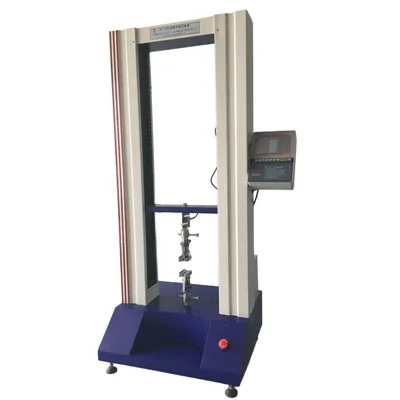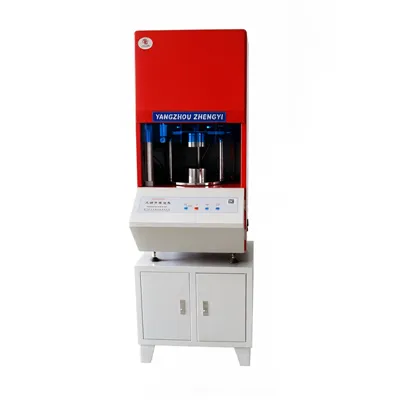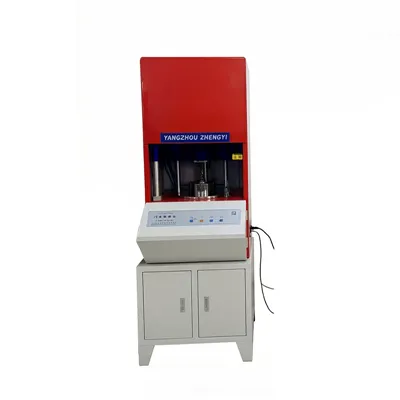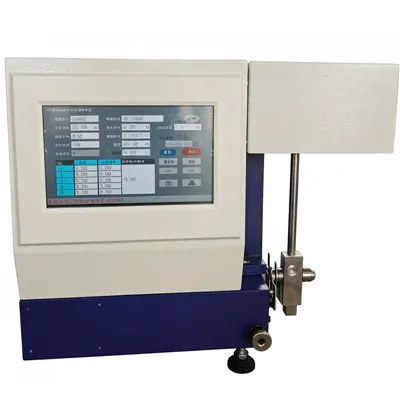
With the rapid development of the polymer materials industry, rubber and plastic testing machines have become essential instruments for evaluating material performance. These systems are designed to analyze the mechanical behavior of rubber and plastic materials under controlled conditions, and their fundamental characteristics are increasingly defined by high precision, multifunctionality, and intelligent operation.
From a structural perspective, these machines are typically built on a modular architecture consisting of a loading system, gripping fixtures, sensing components, and a control unit. The loading system provides stable and precisely regulated mechanical forces, enabling various test modes such as tension, compression, and bending. The gripping system is designed to accommodate different specimen shapes, ensuring uniform stress distribution throughout the testing process and improving the reliability of results. This modular structure enhances adaptability and ensures compatibility with multiple testing standards.
In terms of performance, one of the most prominent features is high-precision measurement capability. Equipped with sensitive force and displacement sensors, the system can capture minute changes in material behavior during loading and convert them into accurate digital data. This level of precision meets the strict requirements of both scientific research and industrial quality control.
Another key feature is strong multifunctional testing capability. A single unit can perform a wide range of tests, including tensile, compression, bending, peeling, tearing, and impact analysis. This versatility makes the equipment suitable for rubber, plastic, and composite materials across various industries, while also improving equipment utilization and reducing testing costs.
Modern systems also rely on computerized intelligent control. Test parameters can be automatically configured, processes are monitored in real time, and results are analyzed and generated without manual intervention, significantly improving operational efficiency and data consistency.
In addition, advanced data processing and visualization functions allow test results to be presented in the form of stress-strain curves and other graphical outputs, providing clear and intuitive insights into material behavior.
Overall, rubber and plastic testing machines stand out for their modular structure, high precision, multifunctionality, and intelligent control, making them indispensable tools in modern material testing systems.