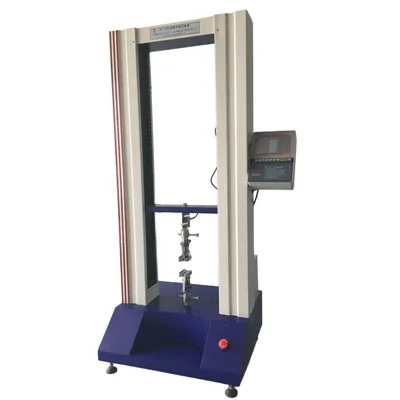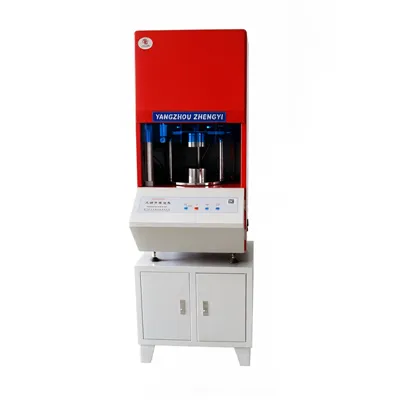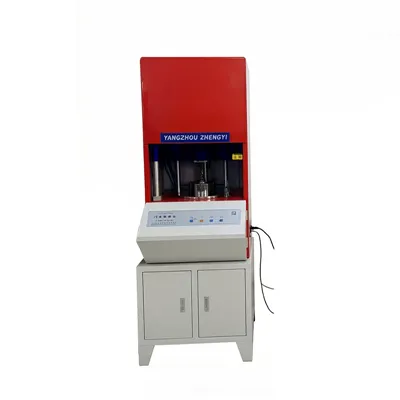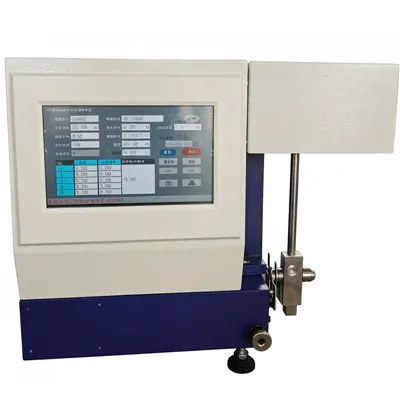
Rubber and plastic testing machines are essential instruments used to evaluate the mechanical behavior of elastomeric and polymer materials. Their primary function is to apply controlled mechanical forces while precisely recording material responses, allowing engineers to simulate real-world working conditions and obtain accurate performance data. These systems are widely used in industries such as rubber manufacturing, plastic processing, automotive components, and scientific research.
The operation of these machines is based on an integrated system consisting of a loading mechanism, specimen gripping units, sensing components, and data processing software. The loading system applies different types of forces, including tension, compression, bending, and shear, typically driven by a motorized screw system or hydraulic drive for precise control. The gripping mechanism securely holds the specimen in place to ensure stability and prevent slippage during testing, which is critical for maintaining data accuracy.
During operation, force sensors and displacement sensors continuously capture real-time changes in the material under load, including applied force, deformation, and strain rate. These signals are transmitted to a computerized control system, where specialized software processes the information and generates key analytical outputs such as stress-strain curves.
By interpreting these results, engineers can determine essential material properties such as tensile strength, elongation at break, elastic modulus, and impact resistance. These parameters are crucial for product development, quality assurance, and process optimization. In plastic testing, the focus is often on deformation behavior under varying loads, while in rubber testing, elasticity and durability are of primary concern.
As modern manufacturing continues to advance toward higher precision and automation, testing equipment in this field is also evolving. Enhanced digital control systems and automated data analysis have significantly improved testing efficiency, repeatability, and reliability, providing stronger technical support for material science and industrial applications.