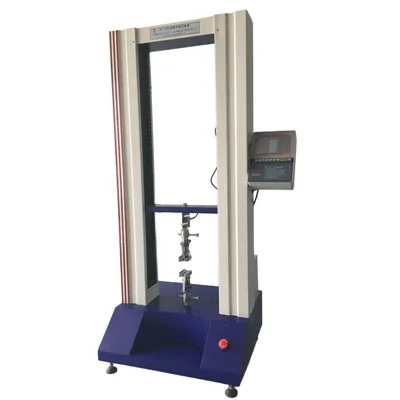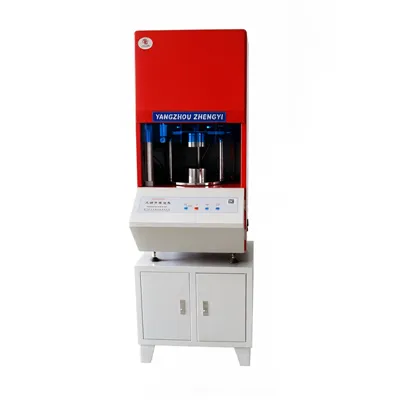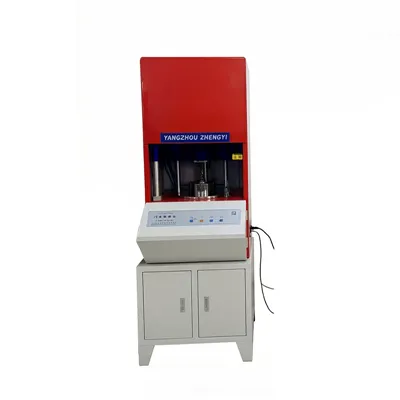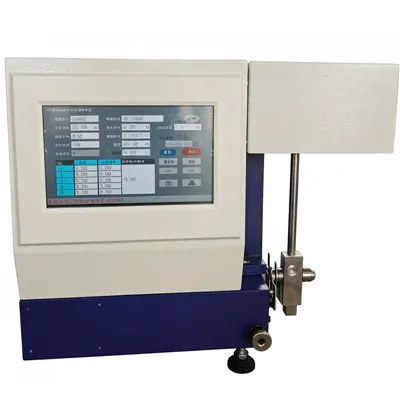
Rubber and plastic testing machines play a vital role in the evaluation of polymer materials, supporting research, quality control, and industrial production. Their advantages are mainly reflected in testing accuracy, functional versatility, automation level, and broad applicability, making them indispensable tools in the rubber and plastics industry.
One of the most significant advantages is high-precision testing capability. Equipped with sensitive force and displacement sensors, the system can accurately capture subtle changes in materials under load and convert them into reliable data. This ensures strong repeatability and stability, meeting the strict requirements of both scientific research and industrial quality inspection.
Another key advantage is multifunctional integration. A single machine can perform various mechanical tests, including tensile, compression, bending, peeling, tearing, and impact testing. The ability to switch between different testing modes improves equipment utilization and reduces overall investment in testing systems.
High levels of automation and intelligence represent another important strength. Modern systems are typically controlled by computer-based platforms that enable automatic parameter setting, real-time process monitoring, and automatic result analysis. This reduces manual intervention while significantly improving testing efficiency and data consistency.
In addition, these machines offer broad application flexibility. They are suitable for a wide range of materials, including rubber, plastics, composites, and engineering materials, and are widely used in research institutions, manufacturing enterprises, and third-party testing organizations, covering both laboratory research and industrial applications.
Finally, strong data analysis and visualization capabilities further enhance their value. Specialized software transforms complex test data into clear curves and charts, providing intuitive insights into material behavior and helping engineers make faster and more accurate decisions.
Overall, rubber and plastic testing machines stand out for their high precision, multifunctionality, automation, and wide applicability, making them a key component of modern material testing systems.