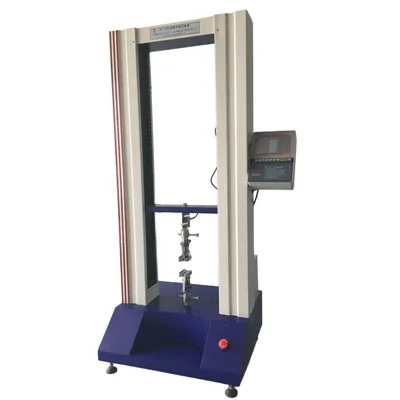
A tensile testing machine, also known as a universal testing machine, is widely used in material mechanics testing. Its primary function is to conduct tensile, compression, bending, and shear tests on various materials. The core working principle involves applying a controlled force or displacement to a specimen and measuring its deformation and fracture characteristics under different stress conditions to obtain mechanical performance data.
The machine consists of a loading system, a measurement system, and a control system. The loading system, typically driven by a servo motor or hydraulic device, applies force to the specimen through screws, hydraulic cylinders, or gear mechanisms. The specimen is secured in grips, and as the load increases, the material deforms. Loading speed and force can be precisely adjusted according to experimental requirements.
The measurement system uses force sensors and displacement sensors to monitor the specimen in real time. Force sensors measure the tensile or compressive force applied to the specimen accurately, while displacement sensors record the elongation or compression of the specimen under load. This data is transmitted to the control system for processing, generating stress-strain curves and other mechanical parameters.
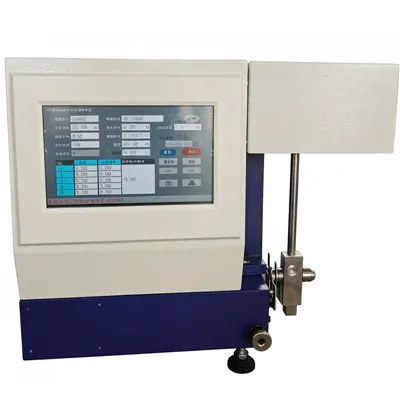
The control system enables precise testing. Through a computer or dedicated controller, loading modes, rates, and termination conditions can be set. Sensor data is collected and analyzed in real time, ensuring both experimental safety and result accuracy. Modern tensile testing machines are also equipped with safety features such as overload protection and grip locking mechanisms.
During a tensile test, the machine applies axial force to the specimen via grips, recording the entire process from elastic deformation, yielding, to fracture. In compression or bending tests, the loading device applies the appropriate stress to the material, monitoring its load-bearing capacity and failure characteristics.
Overall, a tensile testing machine evaluates material mechanical properties by applying controlled forces and measuring deformations with precision. Combined with computerized control and data acquisition, it is an indispensable tool in material development, quality testing, and engineering applications.