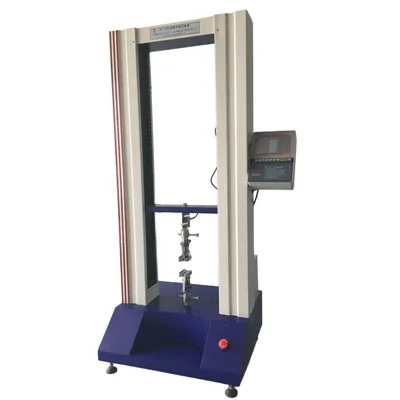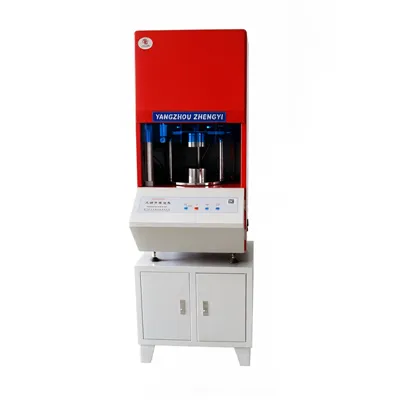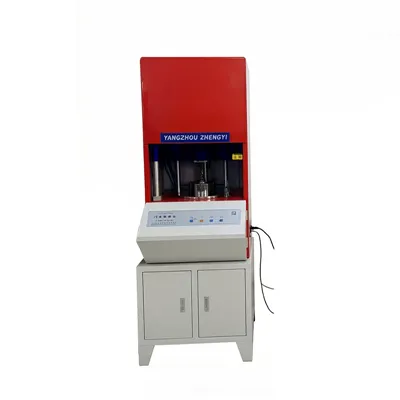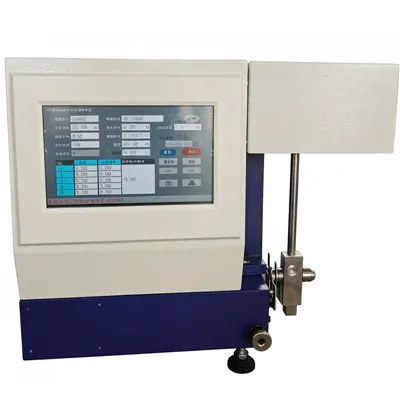
Rubber and plastic testing machines are essential instruments for evaluating the performance of polymer materials. Their primary function is to systematically analyze material behavior under different mechanical conditions through standardized testing methods, providing a scientific basis for material development, production control, and quality inspection.
One of the core functions is mechanical property evaluation. By applying tensile, compression, bending, shear, or impact forces to specimens, the machine measures key parameters such as strength, toughness, elasticity, and elongation. These results directly reflect how a material behaves under real working conditions and serve as an important reference for product design and material selection.
Another important function is quality control in manufacturing. During industrial production, variations may occur between different batches of raw materials or finished products. Standardized testing allows manufacturers to verify consistency and ensure compliance with national or industry standards, thereby improving overall product stability.
The equipment is also widely used in material research and performance optimization. In the development of new materials, researchers can analyze how different formulations or processing conditions affect mechanical behavior, helping to optimize material structure and improve performance. For example, in the rubber industry, it supports vulcanization process optimization, while in plastics, it helps enhance impact resistance.
In addition, these machines are essential for failure analysis and lifespan evaluation. By applying extreme or cyclic loads, they simulate long-term service conditions, identify failure modes, and estimate material durability, providing valuable insights for engineering applications.
Finally, they play an important role in academic research and standard verification. Universities and research institutions use them for scientific studies, while testing organizations rely on them to verify compliance with relevant standards.
Overall, rubber and plastic testing machines serve as a critical tool for quantitative evaluation of polymer materials, bridging the gap between material development and practical engineering applications.