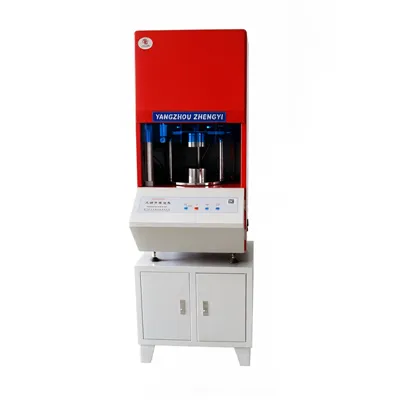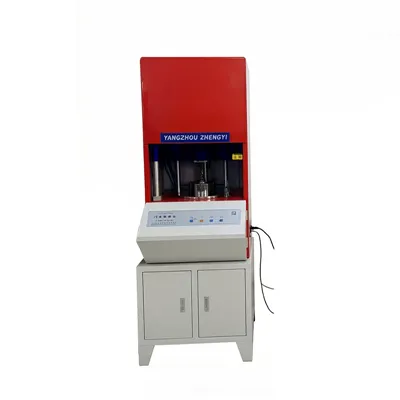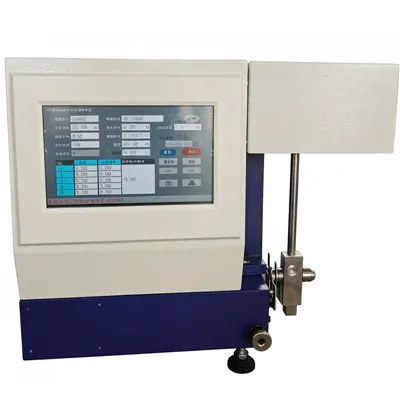
The low-temperature brittleness tester is an important laboratory instrument used to evaluate the performance of rubber, plastics, and polymer materials under low-temperature conditions. It is primarily designed to determine the brittleness temperature and impact resistance of materials, providing insight into their low-temperature adaptability and service reliability.
One of its key features is a high-precision low-temperature control system. The equipment typically uses compressor refrigeration or liquid nitrogen cooling to rapidly reach the set temperature while maintaining stable conditions. Equipped with sensitive sensors, the system ensures uniform temperature distribution, guaranteeing accurate and repeatable test results.
The device also features a standardized impact testing structure. After the specimens are cooled and equilibrated at the required low temperature, an impact mechanism applies a sudden force, causing the material to fracture or deform. By observing the failure condition of the specimens, the brittleness characteristics and minimum service temperature of the material can be determined.
Another important feature is its sample fixation and safety design. The machine is usually equipped with multi-station fixtures that allow simultaneous testing of multiple specimens, improving efficiency. In addition, both the low-temperature environment and impact process are conducted within a sealed chamber, preventing cold air leakage and ensuring operator safety.
The equipment is also compact and easy to operate. Its integrated design combines the refrigeration and impact systems, while the control panel allows straightforward parameter setting and monitoring, making it suitable for both laboratory and industrial testing environments.
Finally, the tester provides clear data output and traceability. Some models are equipped with automatic recording systems that document specimen failure conditions and test results, offering reliable data support for low-temperature material research.
Overall, the low-temperature brittleness tester is characterized by precise temperature control, standardized impact testing, safe structural design, and easy operation. It plays a crucial role in evaluating the low-temperature performance of rubber and plastic materials and serves as an essential device in material quality testing.