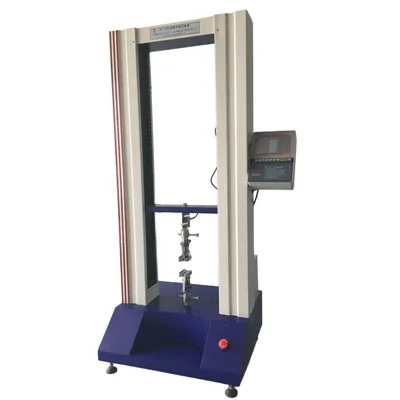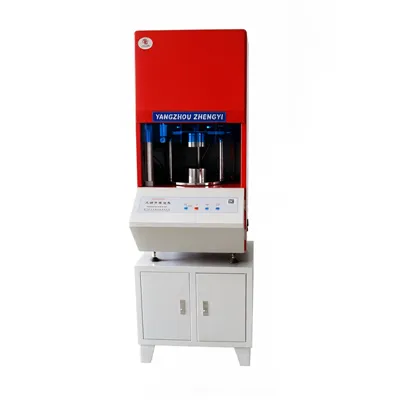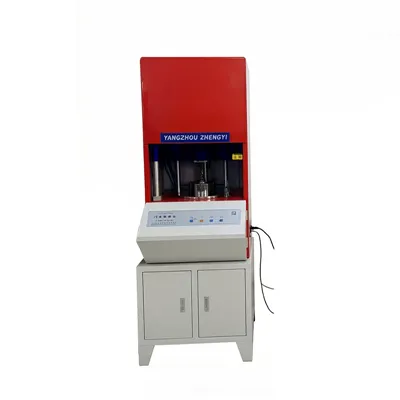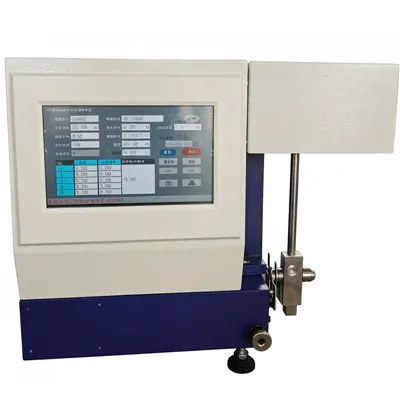
The double-head grinding machine is a key device used in the preparation of rubber, plastic, and composite material specimens. With improvements in structural design and processing methods, it demonstrates significant advantages in efficiency, precision, and operational stability, making it widely used in material testing and laboratory research.
One of its most notable advantages is high processing efficiency. The dual-head structure allows simultaneous or alternating grinding operations, significantly reducing specimen preparation time compared to traditional single-head machines. This is particularly beneficial for batch sample processing and greatly improves overall laboratory productivity.
Another important advantage is high machining accuracy with excellent consistency. The machine utilizes a precision feeding system and stable grinding mechanism to precisely control specimen thickness, ensuring minimal variation between samples and improving the repeatability and comparability of test results.
In addition, it offers superior surface quality. The coordinated action of the two grinding heads ensures more uniform material removal, resulting in smoother and more even specimen surfaces. This is essential for subsequent mechanical testing and microscopic analysis, enhancing the reliability of test outcomes.
The machine also features strong material adaptability. By adjusting grinding parameters, it can process rubber, plastics, and various composite materials with different hardness levels and structures, making it highly versatile across a wide range of applications.
Finally, the double-head grinding machine provides excellent operational stability and ease of use. Its well-designed structure ensures low vibration and noise during operation, while the user-friendly control system simplifies operation and reduces the skill requirements for users.
Overall, with its high efficiency, precision, superior surface quality, and strong adaptability, the double-head grinding machine has become an indispensable tool in polymer material specimen preparation.